Roomba vs Roborock: Best Robot Vacuum in 2025?
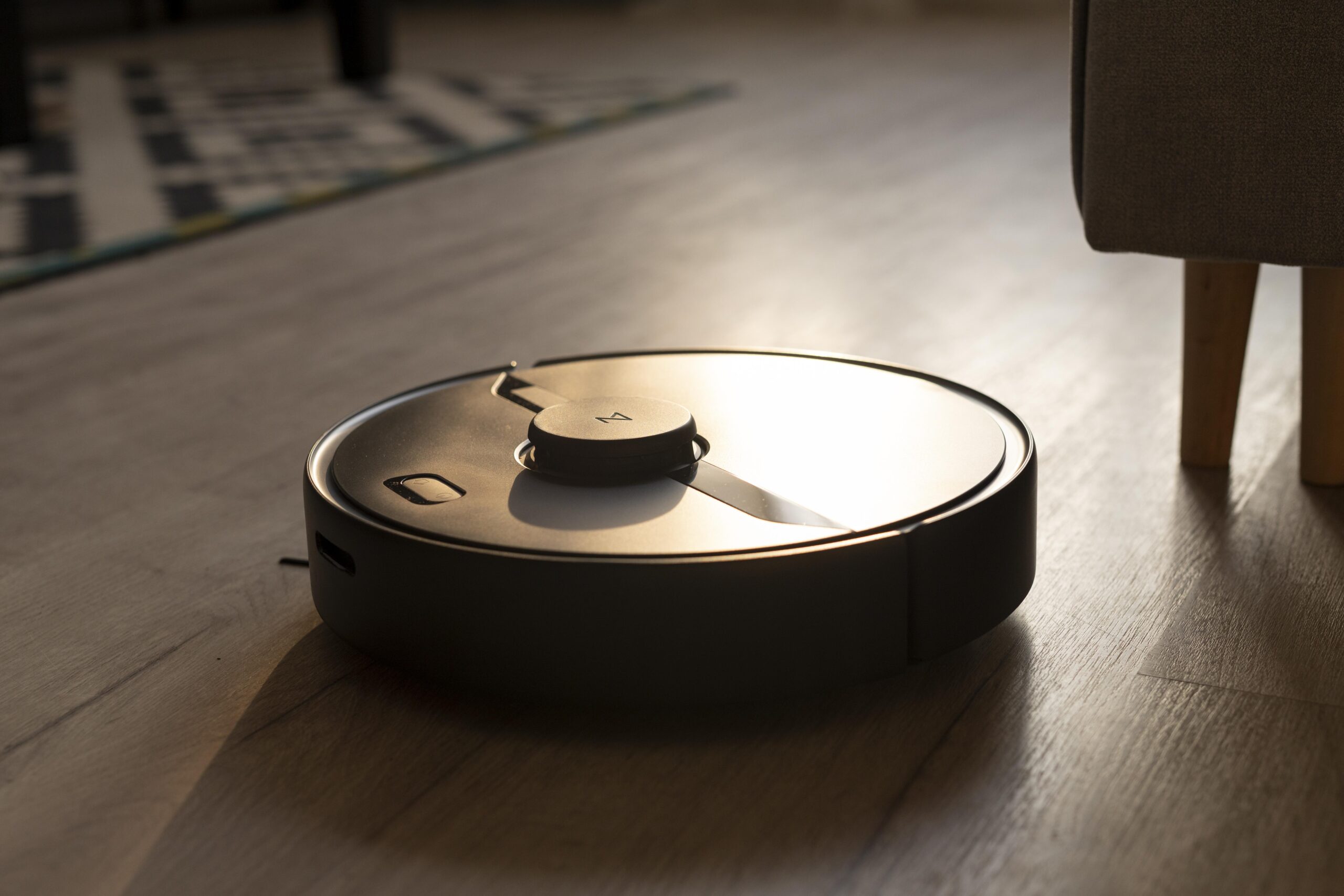
Robot vacuums have evolved from novelty gadgets into essential home appliances. With improved suction power, AI-driven navigation, and advanced mopping functions, today’s robovacs save time and keep homes cleaner than ever.
But when it comes to Roomba vs Roborock in 2025, the choice isn’t straightforward. Roomba, the pioneer of robot vacuums, faces stiff competition from Roborock, a brand that’s rapidly gained global recognition for innovation.
So which one should you buy in 2025? Let’s dive in Roomba vs Roborock
Brand Background: Roomba vs Roborock
Roomba vs Roborock Market Leadership
iRobot, the pioneer behind the iconic Roomba brand, has been a driving force in home automation since its founding in 1990 by a team of MIT roboticists. The launch of the first Roomba robotic vacuum in 2002 marked a turning point in household cleaning, transforming what was once a mundane chore into an effortless, tech-driven experience.
Over the years, iRobot has continually refined its navigation systems, suction power, and AI-driven obstacle avoidance, ensuring each new generation of Roomba stays ahead of the curve. From early models that bounced randomly across rooms to advanced versions capable of mapping entire floors, Roomba’s evolution is a testament to innovation backed by decades of research in robotics and AI.
Roomba’s reputation for reliability, build quality, and consistent cleaning performance has cemented iRobot’s position as a global leader in the smart home cleaning sector. Their high-end models, such as the Roomba Combo J7+ and the Roomba S9+, integrate cutting-edge technologies like:
- PrecisionVision Navigation, which uses AI cameras to recognize and avoid objects such as shoes, cables, and pet waste.
- Smart Mapping, allowing users to customize cleaning zones, set schedules, and even create “no-go” areas via mobile apps.
- Self-emptying Clean Base® docks, which automatically dispose of collected debris, providing a near hands-free cleaning experience for up to 60 days.
Furthermore, iRobot’s focus on user experience and ecosystem integration (especially through partnerships with Amazon Alexa, Google Home, and Apple HomeKit) has made Roomba synonymous with the very concept of a robotic vacuum. Despite growing competition, Roomba remains the benchmark for durability, cleaning precision, and customer trust — the “Kleenex” of robot vacuums.
Roborock’s Rise and Innovation
While iRobot laid the groundwork, Roborock emerged as a dynamic challenger, redefining what consumers expect from a smart vacuum. Founded in 2014 in Beijing, China, Roborock started as a strategic partner of Xiaomi, leveraging the tech giant’s vast ecosystem to bring affordable yet intelligent cleaning devices to the global market.
From the beginning, Roborock differentiated itself through engineering versatility — creating hybrid vacuum-mop systems that offered dual functionality without compromising performance. Its early success came with models like the Roborock S5, which delivered exceptional mapping accuracy at a fraction of the cost of its competitors.
Today, Roborock is recognized for its relentless pace of innovation. The brand has introduced features once thought exclusive to premium devices, such as:
- Advanced LiDAR navigation and ReactiveAI 2.0 obstacle avoidance, offering near-flawless spatial awareness and real-time mapping.
- Automatic mop lifting, allowing seamless transitions from hard floors to carpets without manual intervention.
- Self-cleaning and self-drying mop systems, as seen in flagship models like the Roborock S8 MaxV Ultra, which include hot-water mop washing and intelligent dirt detection to maintain hygiene between cleaning cycles.
- Roborock Docking Stations that combine automatic dust emptying, mop washing, and water refilling in one sleek hub — making maintenance nearly effortless.
Roborock’s combination of high performance, modern design, and competitive pricing has made it a favorite among tech-savvy homeowners who value automation, convenience, and smart integration. The brand’s continuous software updates, compatibility with Google Assistant, Alexa, and Apple Siri Shortcuts, and intuitive Roborock App experience further elevate its position as a strong contender to iRobot.
In less than a decade, Roborock has transitioned from a Xiaomi sub-brand to a standalone global innovator, competing head-to-head with industry veterans. Its rapid expansion into the premium market underscores its strategy: to deliver intelligent cleaning with less effort and more autonomy — pushing the boundaries of what smart home devices can achieve.
Roomba vs Roborock: Legacy Meets Modern Disruption
The Roomba vs Roborock rivalry reflects two distinct philosophies in robotic cleaning innovation. Roomba brings trust, proven technology, and long-term reliability, backed by decades of research and customer loyalty. Roborock, on the other hand, offers innovation at speed, constantly redefining the limits of automation and value.
In 2025, this competition benefits consumers more than ever — as both brands continue to evolve toward smarter, quieter, and more efficient home cleaning ecosystems.
Key Comparison Factors: Roomba vs Roborock (2025 Edition)
Choosing between Roomba and Roborock in 2025 comes down to understanding their core strengths across design, cleaning performance, automation, and value. Both brands have evolved rapidly — but they cater to slightly different priorities: Roomba emphasizes raw cleaning power and proven reliability, while Roborock focuses on automation, innovation, and smart efficiency.
Let’s break down their differences across key performance areas.
Design and Build Quality
Height, Shape, and Furniture Clearance
- Roomba: Slightly taller because of its top-mounted camera module, which aids in AI-based visual navigation but can limit clearance under low furniture such as sofas or cabinets.
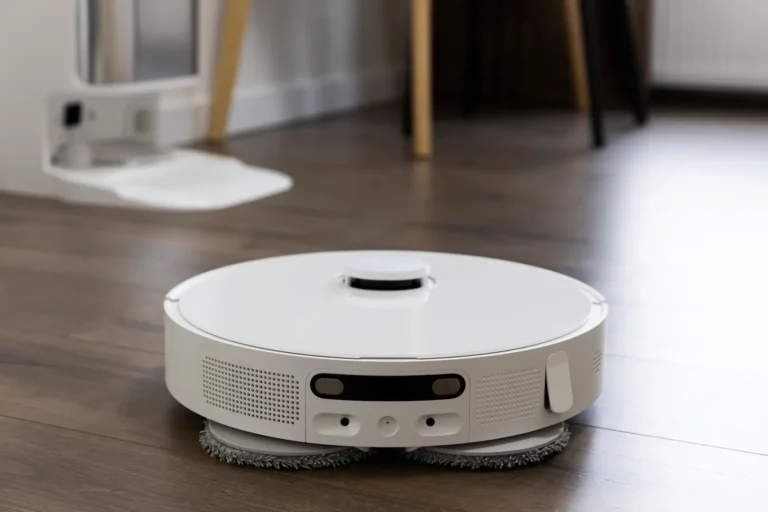
- Roborock: Slimmer, sleeker models like the Roborock Saros 10R or S8 MaxV Ultra easily glide under couches and beds, ensuring full coverage without manual intervention.
✅ Winner: Roborock — better low-clearance design and compact engineering.
Docking Stations and Maintenance
- Roomba J7+: Features a reliable automatic dirt disposal system that empties the dustbin after each run. However, its mop models still require manual water refilling and pad cleaning.
- Roborock S8 MaxV Ultra: Takes automation to the next level with its multi-function dock that empties the dustbin, refills clean water, washes mop pads, and even dries them using hot air to prevent odor buildup.
✅ Winner: Roborock — superior hands-free maintenance and full cleaning automation.
Cleaning Performance
Hard Floors
- Roomba: Excels with industry-leading suction and dirt pickup rates of 95–100% in independent tests for sand, rice, and debris.
- Roborock: Performs well on hard floors but may leave behind fine dust particles occasionally.
🏆 Winner: Roomba — unmatched pickup performance on smooth surfaces.
Carpets and Rugs
- Roomba: Its dual multi-surface rubber rollers penetrate deep into carpet fibers, removing embedded dirt more effectively than most competitors.
- Roborock: Handles low-pile rugs efficiently but can underperform on thicker or high-pile carpets.
🏆 Winner: Roomba — superior for deep carpet cleaning.
Pet Hair and Allergens
- Roborock: Innovative split brush design resists tangling, minimizing maintenance for pet owners.
- Roomba: While its rollers can catch hair, they’re easier to clean, and the vacuum’s stronger suction helps extract pet fur and allergens from carpets more effectively.
🏆 Winner: Roomba — powerful suction gives it a slight edge in pet hair removal.
Mopping Features
Roomba’s Mop Lifting Technology
The Roomba Combo J7+ uses an auto-lifting mop pad that raises itself when transitioning from hard floors to carpets — effectively preventing damp spots or residue on rugs.
Roborock’s Advanced Hot Water Mopping
The Roborock S8 MaxV Ultra goes beyond basic mopping with hot-water mop cleaning, built-in detergent dispensers, and automatic drying functions. These features keep mop pads clean, sanitary, and odor-free after every cycle.
✅ Winner: Roborock — more advanced, hygienic, and autonomous mopping system.
Navigation and Obstacle Avoidance
Camera vs. LiDAR Systems
- Roomba: Uses AI-driven camera vision, which provides superior object recognition and hazard detection. However, camera-based systems rely on light and can struggle in dimly lit environments.
- Roborock: Combines LiDAR sensors with RGB cameras, delivering 3D mapping accuracy and consistent navigation — even in complete darkness.
Hazard Avoidance
- Roomba J7+: Renowned for its precision obstacle avoidance — even earning CNET’s “Best Poop Avoidance” Award thanks to its accurate pet waste detection.
- Roborock: Offers more comprehensive floor mapping and multi-room path optimization, making it efficient for large spaces.
🤝 Winner: Draw — Roomba for hazard detection; Roborock for all-around mapping accuracy.
Smart Features and App Control
Mapping Accuracy
- Roborock: Its app delivers highly detailed 3D maps, room labeling, no-go zones, and even virtual walls. Users can set custom cleaning orders and specific mop intensity levels per room.
- Roomba: The iRobot app is simpler but still effective, with reliable smart mapping and scheduling capabilities.
Voice Assistant Compatibility
Both support Amazon Alexa, Google Assistant, and Apple Siri Shortcuts, allowing for convenient voice control.
✅ Winner: Roborock — more customization and intuitive mapping through its advanced app.
Battery Life and Charging
- Roborock: Known for longer battery life, with models like the Roborock Q5 Max+ cleaning large homes on a single charge (up to 180 minutes of runtime).
- Roomba: Dependable batteries, but slightly shorter runtimes, averaging 90–120 minutes depending on model.
✅ Winner: Roborock — longer runtime and efficient energy management.
Price and Value in 2025
Budget-Friendly Options
- Roomba 694: Priced under $300, dependable but lacks smart mapping and mop functions.
- Roborock Q5 Max+: Costs around $400–$500, includes multi-floor mapping and a self-emptying dock — a rare combination at this price.
🏆 Winner: Roborock — better value and features for the money.
Mid-Range Choices
- Roomba i3 EVO / J7: Known for carpet performance, pet hair cleaning, and hazard avoidance.
- Roborock Qrevo / Q5 Max+: Offer balanced vacuuming and mopping, with solid LiDAR navigation.
🤝 Winner: Draw — Roomba for deep cleaning; Roborock for dual functionality.
Premium Flagship Models
- Roomba Combo J7+ / Combo 10 Max: $1,000–$1,400, delivering powerful suction and excellent AI navigation.
- Roborock S8 MaxV Ultra / Saros 10R: $1,200–$1,800, featuring auto mop washing, hot air drying, and next-gen mapping.
🏆 Winner: Depends on your needs — Roomba for raw cleaning strength; Roborock for smart automation.
Customer Satisfaction and Reviews
- Roomba J7+: Rated 8.7/10 by CNET, highly praised for carpet cleaning performance and object avoidance.
- Roborock S8 MaxV Ultra: Rated 8.3/10 by CNET, but often scores higher user ratings on Amazon (4.2★ vs Roomba’s 3.6★) thanks to ease of use and automation.
✅ Winner: Roborock (customer satisfaction)
🏅 Roomba (expert performance)
Pros and Cons: Roomba vs Roborock
Why Choose Roomba
✅ Superior carpet cleaning and suction power.
✅ Exceptional pet waste and obstacle detection.
✅ Long-standing brand reliability and proven ecosystem.
✅ Strong build quality and dependable performance.
Why Choose Roborock
✅ Fully automated multi-function docking stations.
✅ Advanced LiDAR + AI navigation and detailed mapping.
✅ Better battery life and value for money.
✅ Intuitive app control with frequent software updates.
FAQs: Roomba vs Roborock
Conclusion: Roomba vs Roborock
Both Roomba and Roborock dominate the robot vacuum market in 2025, but your decision depends on priorities:
- Roomba = best for suction and carpet cleaning.
- Roborock = best for automation, mapping, and mopping.
Either way, you’re getting a powerful cleaning ally that will save you time and effort.